Trees, crops, and native ecosystems working together — a living laboratory for the Midwest.
An expanding network of interconnected windrows and riparian buffers planted with an abundance of native and edible tree crops, shrubs, plants, and grasses throughout the agricultural landscapes of the Midwest. This agroforestry work can begin to restore the endangered native prairies and savannas that were once the largest and most diverse contiguous ecosystem on the continent.
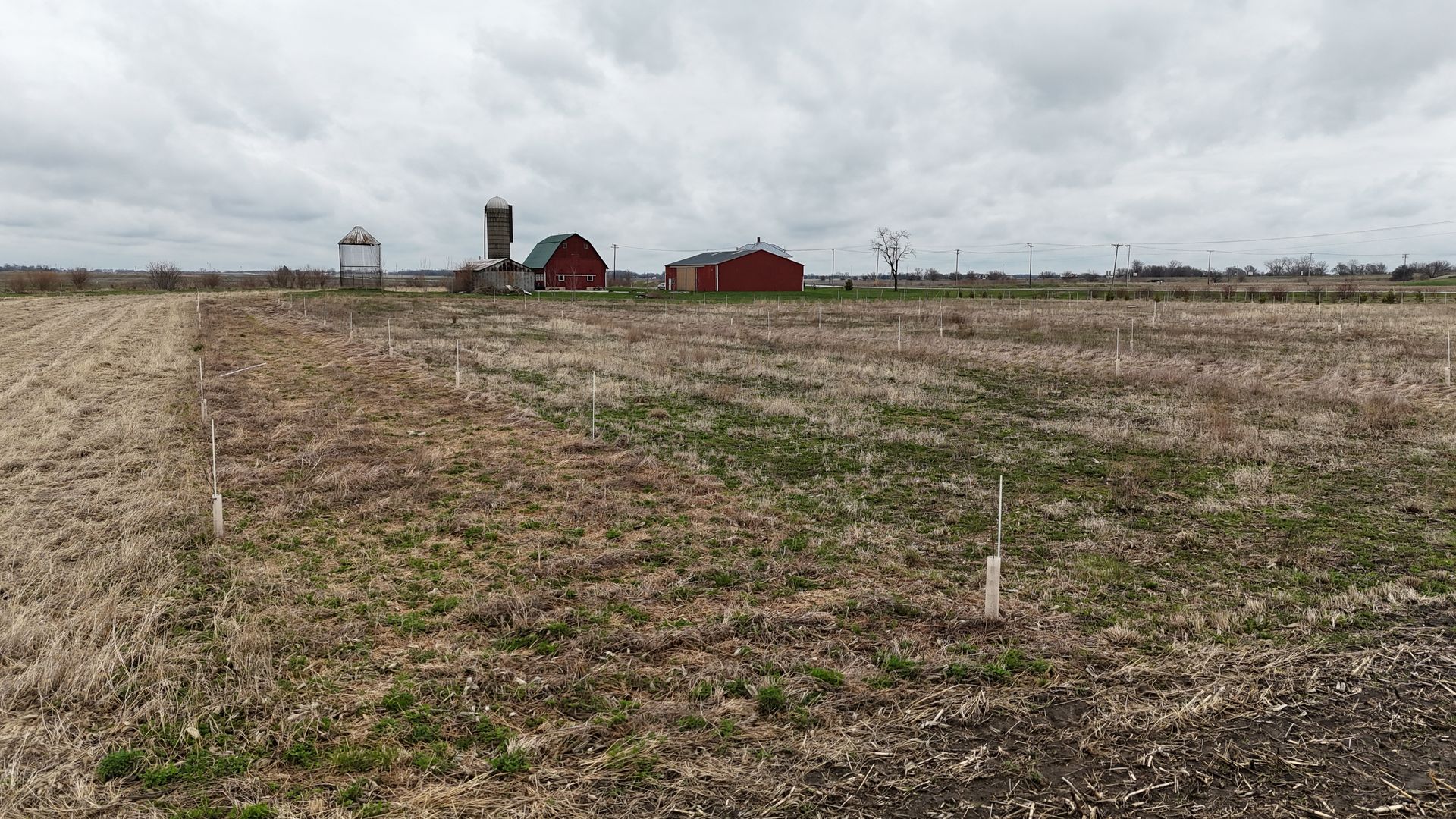
South of the barn sit five double rows of pecan trees with 20-foot and 60-foot alleys between them. These alleys allow for diverse understory plantings and inter-cropping — a core principle of agroforestry that maximizes productivity per acre while building soil health.
Rock Creek is expanding its pecan tree trial area on the 10-acre parcel, testing cultivars suited to the Illinois climate and developing production models that other Midwest farmers can replicate.
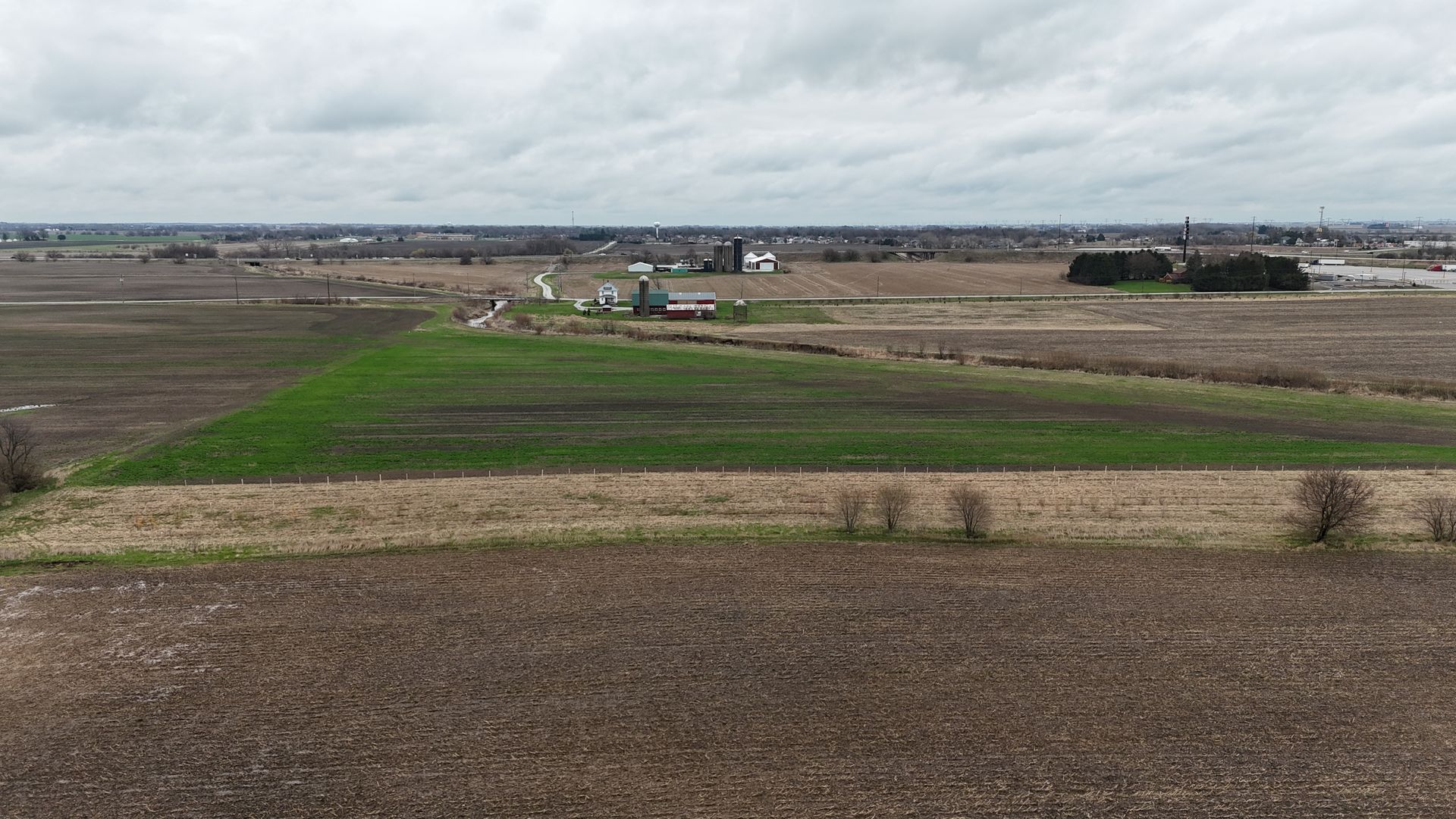
In 2020, the Savanna Institute partnered with Iroquois Valley to install 25 acres of windrow plantings along the borders of Rock Creek Farm. The result: approximately 10,000 native Illinois trees from 25 species — including legacy trees, shrubs, spruce, pine, and hybrid poplar.
The eastern border windbreak consists of 5-6 rows spaced 12 feet apart, creating a layered canopy that provides wind protection, wildlife habitat, and carbon sequestration. Rock Creek LLC holds a 5-year lease on the windbreak bordering the 80-acre parcel, with plans to extend to a 20-year lease under conservation easement.
Restoring native ecosystems along waterways and between fields.
Rock Creek itself runs through the farm site from the northeast, connecting to the Kankakee River State Park 12 miles downstream. The stream was dredged and farmland was tiled in the 1960s. RCA is utilizing riparian plantings to curtail future damage and demonstrate how to restore such decimated waterways across three counties.
The existing windbreaks are being transformed into a pollinator preserve — free of chemicals and welcoming to pollinators, wildlife, and monarch butterflies. Native wildflowers, grasses, and understory plantings create continuous forage throughout the growing season.
Rock Creek's work reconnects novel habitats representative of the endangered native prairies and savannas of the Midwest. Dense grove development on the acreage creates structural diversity that mimics the oak savannas that once covered this landscape.
Understanding the landscape: 80 acres of integrated agroforestry, waterways, and conservation areas.
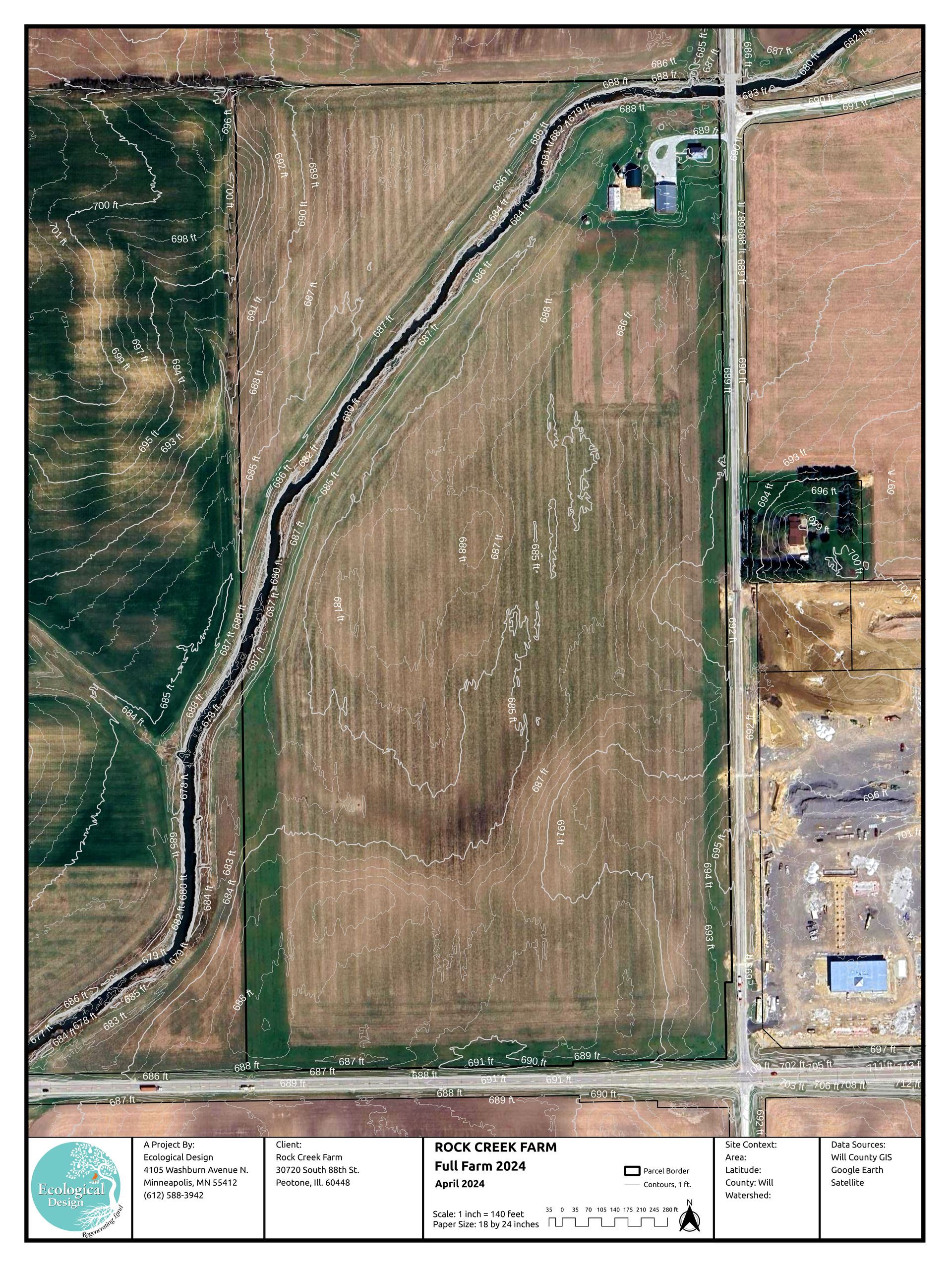
80 Acres Base Map
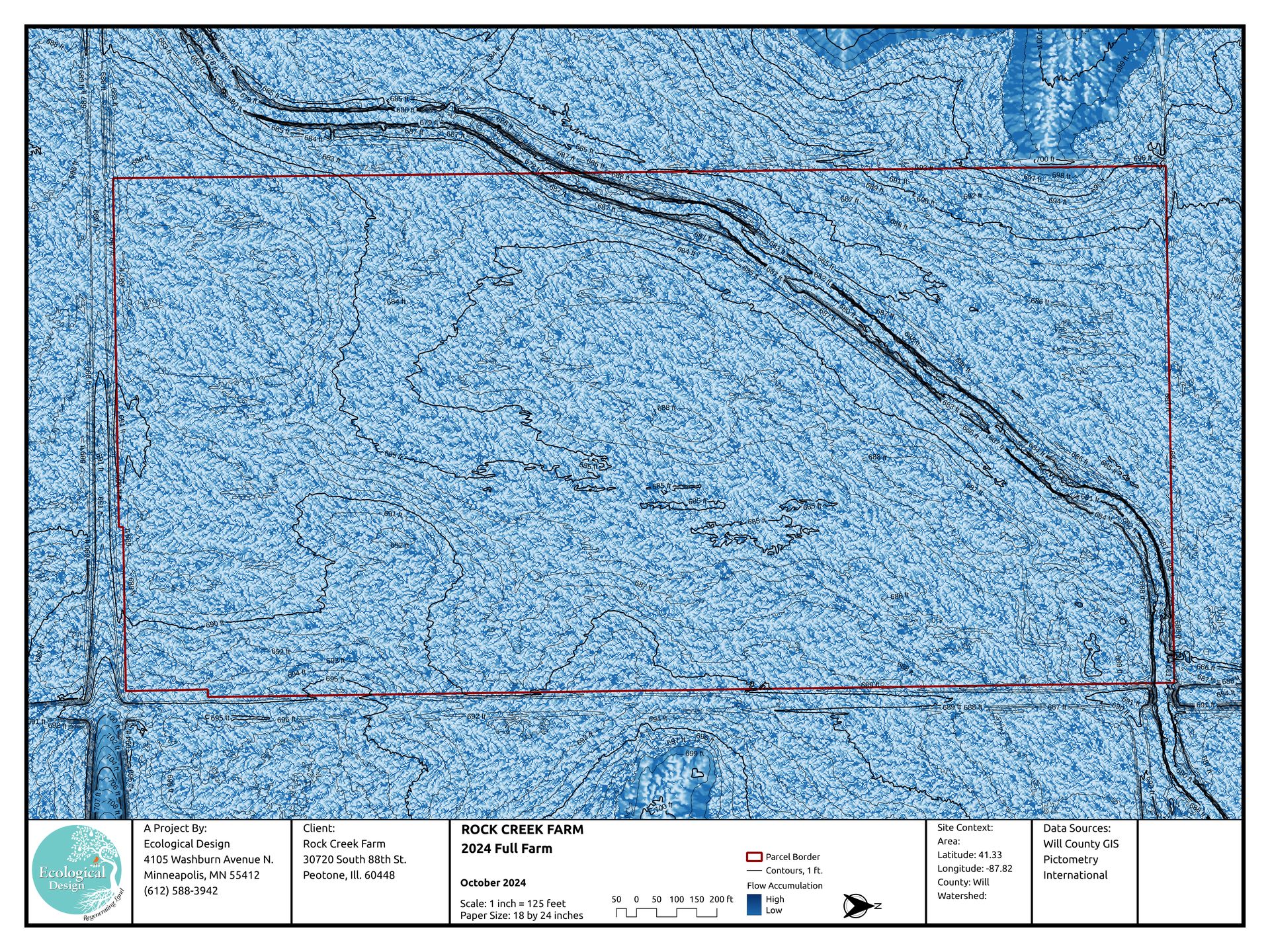
Water Map
Visit Rock Creek and experience regenerative agroforestry in action.
Plan a Visit